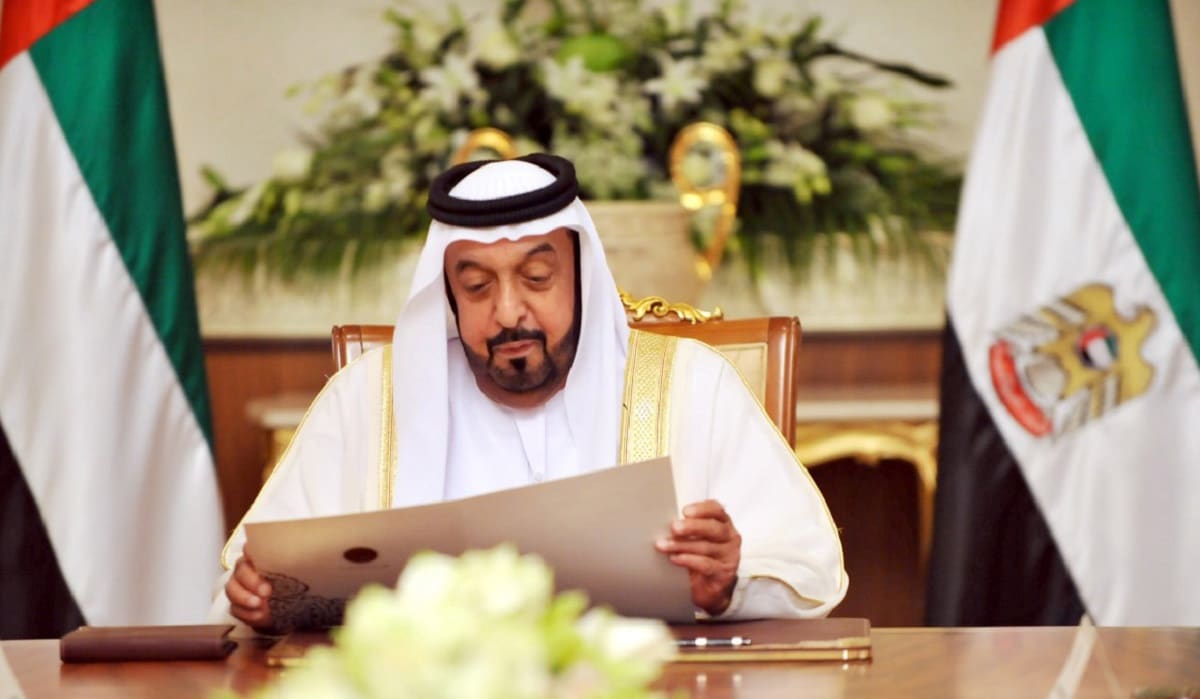
todozoo.com – Sheikh Khalifa bin Zayed Al Nahyan, the second president of the United Arab Emirates (UAE), served as the nation’s leader from 2004 until his passing in 2022. As the eldest son of Sheikh Zayed bin Sultan Al Nahyan, the founder of the UAE, Sheikh Khalifa inherited a country that had been transformed into a regional powerhouse. His leadership was defined by the continued modernization of the UAE, economic diversification, and an unwavering commitment to enhancing the welfare of the Emirati people. His tenure also saw the UAE’s growing global influence, especially in the fields of diplomacy, defense, and technological innovation.
Early Life and Background
Sheikh Khalifa was born on September 7, 1948, in Al Ain, in the Emirate of Abu Dhabi. He was the son of Sheikh Zayed bin Sultan Al Nahyan, the founder of the UAE, and his wife, Sheikha Hessa bint Mohammed Al Nahyan. Sheikh Khalifa grew up surrounded by the traditions of the Al Nahyan family, whose leadership and vision would ultimately shape his future role as the leader of the UAE.
Educated in the UAE and abroad, Sheikh Khalifa was trained to lead from a young age. He received his early education in Al Ain before attending the Royal Military Academy Sandhurst in the United Kingdom, a prestigious institution that prepared him for leadership in both governance and military matters.
Sheikh Khalifa’s rise to leadership came after the death of his father, Sheikh Zayed, in November 2004. As the Crown Prince of Abu Dhabi and the designated successor to his father, Sheikh Khalifa assumed the presidency of the UAE on November 3, 2004, following a smooth transition of power, as outlined by his father’s legacy.
Leadership and Governance
Sheikh Khalifa’s presidency was marked by a strong emphasis on continuing the legacy of his father while adapting to the changing demands of the modern world. Under his leadership, the UAE continued to prosper and grow, benefiting from the foundations laid by Sheikh Zayed while also embracing new challenges and opportunities.
Economic Diversification
One of Sheikh Khalifa’s key initiatives as president was to further the UAE’s efforts in economic diversification. While oil remained a significant driver of the UAE’s wealth, Sheikh Khalifa recognized the importance of reducing the country’s reliance on hydrocarbons and strengthening other sectors of the economy. His leadership helped steer the UAE toward becoming a global hub for trade, tourism, finance, and technology.
Under Sheikh Khalifa, the UAE invested heavily in infrastructure, real estate, and the development of world-class cities such as Dubai and Abu Dhabi. Major projects such as the Burj Khalifa, the tallest building in the world, and the expansion of international airports and ports, reflected his vision for the UAE as a center for commerce and innovation.
Sheikh Khalifa’s government also promoted economic reforms to enhance the business environment and attract international investments. The implementation of free zones, tax incentives, and an increasingly diversified economy helped ensure that the UAE remained competitive on the global stage.
Healthcare, Education, and Social Welfare
In line with the vision of his father, Sheikh Khalifa made significant investments in healthcare, education, and social welfare. He recognized that a well-educated, healthy population was crucial to the UAE’s long-term success.
Under Sheikh Khalifa’s leadership, the UAE made considerable strides in expanding access to healthcare and modernizing the country’s medical facilities. The government introduced a variety of social programs to improve the quality of life for UAE citizens, including increased financial support for families, housing initiatives, and investments in medical care.
In the field of education, Sheikh Khalifa’s administration focused on developing a robust national education system that emphasized innovation, technology, and scientific research. Universities such as Khalifa University and the establishment of various research centers under his leadership helped foster a knowledge-based economy.
Environmental Sustainability
Sheikh Khalifa was also dedicated to ensuring that the UAE’s economic development was sustainable and environmentally responsible. His administration introduced several initiatives aimed at reducing the country’s carbon footprint, including investments in renewable energy.
The development of Masdar City, an eco-friendly urban development project in Abu Dhabi, is one of the most notable examples of Sheikh Khalifa’s commitment to environmental sustainability. The city, designed to be carbon-neutral and powered by renewable energy, reflects his leadership in promoting green technologies and sustainable urban planning.
Diplomacy and International Relations
Under Sheikh Khalifa’s leadership, the UAE strengthened its diplomatic ties with countries across the world. His foreign policy emphasized peaceful diplomacy, economic cooperation, and the development of strong bilateral relationships with key nations.
The UAE, under Sheikh Khalifa, played an increasingly prominent role in regional affairs and global politics. The UAE’s foreign policy was centered on promoting stability, peace, and development, particularly in the Middle East. The country became involved in several key international initiatives, including humanitarian assistance, peacekeeping operations, and trade agreements.
The UAE also expanded its military role in regional and international security. Sheikh Khalifa supported the development of a modern and capable military, which became a key component of the UAE’s influence in the Gulf region and beyond.
Humanitarian and Charity Work
A defining feature of Sheikh Khalifa’s reign was his commitment to humanitarian work and charity. The UAE, under his leadership, became a major donor to international humanitarian aid, providing financial support and resources to countries in need.
Sheikh Khalifa’s charitable initiatives focused on education, healthcare, and disaster relief. His leadership saw the establishment of the Khalifa bin Zayed Al Nahyan Foundation, which supports humanitarian projects across the globe, particularly in the areas of healthcare, education, and infrastructure.
The UAE’s commitment to philanthropy also extended within its borders, with Sheikh Khalifa implementing a range of social welfare programs to ensure the prosperity and well-being of UAE citizens.
Passing and Legacy
Sheikh Khalifa bin Zayed Al Nahyan passed away on May 13, 2022, after a prolonged illness. His death marked the end of an era in the UAE’s history, and his passing was mourned not only in the UAE but also across the world. Sheikh Khalifa’s leadership was instrumental in shaping the modern UAE, and his legacy continues to influence the country’s development.
Sheikh Khalifa’s son, Sheikh Mohamed bin Zayed Al Nahyan, succeeded him as the president of the UAE, continuing the vision of the Al Nahyan family for a strong, prosperous, and progressive nation.
Sheikh Khalifa’s contributions to the UAE’s growth, its modernization, and its international standing will remain integral to the country’s identity. His vision for a diversified economy, his focus on sustainable development, and his dedication to enhancing the lives of UAE citizens have left an enduring legacy for future generations.