The Enigmatic Smile: Behind the Mona Lisa

todozoo.com – The Mona Lisa, a half-length portrait painting by the Italian Renaissance artist Leonardo da Vinci, has captivated the world for centuries. This iconic artwork, housed in the Louvre Museum in Paris, is celebrated for its enigmatic smile and masterful technique.

The Mysterious Subject

The identity of the woman portrayed in the Mona Lisa has been the subject of much speculation. Traditionally, it has been believed to be Lisa Gherardini, the wife of a wealthy Florentine merchant, Francesco del Giocondo. However, recent theories suggest that the subject may have been someone else entirely, possibly a member of the Medici family or even a self-portrait of Leonardo himself.

Leonardo’s Innovative Technique

One of the key factors contributing to the Mona Lisa’s enduring appeal is Leonardo’s innovative use of artistic techniques. He employed a technique known as sfumato, which involves the subtle blending of colors to create a smoky, almost dreamlike effect. This technique gives the painting a sense of depth and realism, as well as a mysterious aura.

The Enigmatic Smile

The Mona Lisa’s enigmatic smile has been the subject of countless interpretations. Some art historians believe that the smile is a subtle expression of happiness, while others suggest that it is a more complex emotion, perhaps a combination of amusement, contentment, and even melancholy. The ambiguity of the smile has led to endless speculation and debate.

A Cultural Icon

The Mona Lisa has become a cultural icon, recognized worldwide as a symbol of art and beauty. Its theft from the Louvre in 1911 brought it even greater fame, and it has since been the subject of countless parodies, homages, and references in popular culture.

The Theft and Recovery

On August 21, 1911, the Mona Lisa was stolen from the Louvre, causing a sensation around the world. The theft was a mystery for two years, during which time the painting was missing and presumed lost. Eventually, it was discovered that the theft had been committed by a former Louvre employee named Vincenzo Perugia, who had stolen the painting and kept it hidden in his apartment. The painting was recovered and returned to the Louvre in 1913, where it remains on display today.

The Enduring Legacy

The Mona Lisa continues to fascinate and inspire, drawing millions of visitors to the Louvre each year. Its enduring appeal lies in its enigmatic beauty, its masterful technique, and the mystery surrounding its subject and creation. It remains one of the most famous and beloved artworks in the world, a testament to Leonardo da Vinci’s genius and a symbol of the enduring power of art.
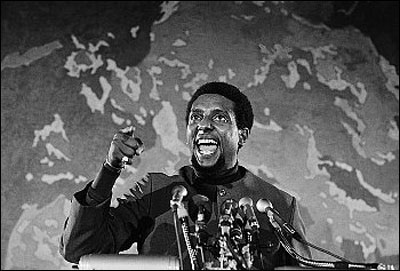

Black Power Movement Leader: Kwame Ture (Stokely Carmichael)

todozoo.com – Kwame Ture, born Stokely Carmichael on June 29, 1941, in Port of Spain, Trinidad, immigrated to New York City in 1952. He attended the prestigious Bronx High School of Science and later enrolled at Howard University in 1960, where he majored in philosophy. At Howard, he joined the Student Nonviolent Coordinating Committee (SNCC) and the Nonviolent Action Group, becoming deeply involved in the civil rights movement.

Civil Rights Activism

Carmichael’s activism began in earnest during his college years. In 1961, he participated in the Freedom Rides, traveling through the South to challenge segregation laws in interstate transportation. He was arrested and jailed for about 50 days in Jackson, Mississippi, for his participation. After graduating from Howard University in 1964, Carmichael joined SNCC full-time, working on voter registration drives in the Deep South. He helped organize the Lowndes County Freedom Organization, an independent political party that used a black panther as its emblem, a symbol later adopted by the Black Panther Party.

The Black Power Movement

In 1966, Carmichael became the chairman of SNCC and used the phrase “Black Power” during a march in Mississippi, rallying demonstrators to support self-defense tactics, self-determination, political and economic power, and racial pride. This slogan marked a significant shift from the nonviolent approach advocated by Martin Luther King Jr., and it galvanized a movement that emphasized black self-reliance and empowerment.

International Activism and Later Life

Carmichael’s increasingly radical stance led him to leave SNCC in 1968. He traveled abroad, speaking out against political and economic repression and denouncing U.S. involvement in the Vietnam War. Upon his return, his passport was confiscated and held for 10 months. In 1969, he moved to Guinea, West Africa, with his first wife, South African singer Miriam Makeba. There, he changed his name to Kwame Ture in honor of Ghanaian Kwame Nkrumah and Guinean Sékou Touré, and he helped establish the All-African People’s Revolutionary Party, dedicated to Pan-Africanism and the plight of Africans worldwide.

Legacy

Kwame Ture’s legacy is complex and multifaceted. He is remembered as a key figure in the Black Power movement, a Pan-African revolutionary, and a vocal critic of U.S. foreign policy. His advocacy for black self-determination and his critique of nonviolence as a strategy for achieving civil rights have left a lasting impact on the civil rights movement and beyond.

Kwame Ture passed away on November 15, 1998, in Conakry, Guinea, at the age of 57, leaving behind a rich legacy of activism and thought that continues to influence discussions on race, power, and social justice.

Scribe of the Divine Writings: Sacred Texts of Ancient Egypt

todozoo.com – In ancient Egypt, where religion and the divine were interwoven into the fabric of daily life, the role of the scribe was not merely administrative but also deeply spiritual. Among these scribes, the Scribe of the Divine Writings held a particularly revered position. These individuals were specialists in the transcription, creation, and preservation of religious and sacred texts, which were essential for the maintenance of ma’at (order, truth, and justice) and the proper functioning of the cosmos. This article delves into the role and significance of the Scribe of the Divine Writings in ancient Egyptian society.

The Sacred Nature of Writing in Ancient Egypt

Writing was considered a divine gift in ancient Egypt, believed to have been bestowed upon humanity by the god Thoth, the deity of wisdom, writing, and magic. As such, the act of writing, especially when it pertained to religious and sacred matters, was imbued with a sense of the divine. The Scribe of the Divine Writings was thus not just a record-keeper but also a conduit for the sacred knowledge and will of the gods.

The Training and Skills of the Scribe of the Divine Writings

To become a Scribe of the Divine Writings, one underwent rigorous training from a young age. This education included mastering the complex hieroglyphic script, as well as the cursive hieratic and demotic scripts used for more everyday purposes. Scribes also studied religious texts, magical spells, and the intricacies of Egyptian theology and mythology. They learned the proper rituals and prayers to accompany their work, ensuring that the act of writing itself was performed with the necessary piety and reverence.

The Responsibilities of the Scribe of the Divine Writings

The primary responsibility of the Scribe of the Divine Writings was to produce Link Spaceman and maintain accurate copies of sacred texts. These included the Pyramid Texts, Coffin Texts, and the Book of the Dead, which were essential for the funerary rites and the journey of the deceased into the afterlife. Scribes also inscribed temple walls with hymns, prayers, and ritual texts, and they created magical texts and amulets to protect the living and the dead.

In addition to their role in the production of religious texts, Scribes of the Divine Writings were often involved in the composition of new works. They collaborated with priests and other religious officials to create liturgies, spells, and other texts that reflected the evolving religious practices and beliefs of ancient Egypt.

The Significance of the Scribe of the Divine Writings

The Scribe of the Divine Writings played a crucial role in the religious and cultural life of ancient Egypt. Their work ensured the continuity of Egyptian religious traditions and the preservation of sacred knowledge across generations. By accurately transcribing and creating religious texts, these scribes helped to maintain the balance of ma’at and to uphold the cosmic order.

Moreover, the Scribe of the Divine Writings was a key figure in the education of priests and other religious officials. They passed on their knowledge of hieroglyphs, religious texts, and ritual practices, thereby ensuring that the next generation could continue to serve the gods and the community.

The Legacy of the Scribe of the Divine Writings

The legacy of the Scribe of the Divine Writings is evident in the wealth of religious texts and inscriptions that have survived from ancient Egypt. These materials provide modern scholars with invaluable insights into the beliefs, practices, and knowledge of the ancient Egyptians. The meticulous work of these scribes has ensured that the wisdom of ancient Egypt continues to be studied and appreciated thousands of years after it was first recorded.

In conclusion, the Scribe of the Divine Writings was a vital member of ancient Egyptian society, responsible for the preservation and dissemination of sacred knowledge. Their contributions to the cultural, religious, and intellectual life of Egypt have left a lasting impact on the historical record and our understanding of this ancient civilization.

Struggles and Advances: The History of Human Rights

todozoo.com – Human rights are fundamental freedoms and protections that belong to all people, regardless of race, sex, nationality, age, or any other status. The history of human rights is a complex tapestry of struggles, achievements, and ongoing challenges. It is a story of resilience, advocacy, and the relentless pursuit of justice and equality.

Ancient Roots and Philosophical Foundations

The concept of human rights has ancient roots, with early expressions found in various cultures and religions. Philosophical inquiries by figures such as Socrates, Plato, and Aristotle in ancient Greece laid the groundwork for discussions about justice, equality, and the rights of individuals. Similarly, the teachings of Confucius in China and the principles of Buddhism and Hinduism in Asia contributed to the early understanding of human dignity and rights.

The Enlightenment and the Birth of Modern Human Rights

The 17th and 18th centuries marked a significant period in the evolution of human rights, with the Enlightenment bringing forth new ideas about individual liberty and social contract. Philosophers like John Locke, Jean-Jacques Rousseau, and Immanuel Kant argued for the inherent rights of individuals and the importance of limiting the power of the state.

This intellectual movement paved the way for the American and French Revolutions, which were pivotal moments in the history of human rights. The American Declaration of Independence (1776) and the French Declaration of the Rights of Man and of the Citizen (1789) both asserted the natural and inalienable rights of individuals, including life, liberty, and the pursuit of happiness.

The 20th Century: Codifying Human Rights

The atrocities of World War II, including the Holocaust, underscored the urgent need for a universal framework to protect human rights. In 1945, the United Nations was established with the aim of maintaining international peace and security, and promoting respect for human rights.

The Universal Declaration of Human Rights (UDHR), adopted by the UN General Assembly in 1948, was a landmark achievement. It articulated a broad range of rights and freedoms, including civil, political, economic, social, and cultural rights. The UDHR served as a foundation for subsequent international human rights treaties and conventions, such as the International Covenant on Civil and Political Rights and the International Covenant on Economic, Social and Cultural Rights.

Struggles for Equality and Justice

The history of human rights is also a history of struggles against oppression and discrimination. Movements for civil rights, women’s rights, LGBTQ+ rights, indigenous rights, and the rights of people with disabilities have all contributed to the expansion and deepening of human rights protections.

Figures such as Mahatma Gandhi, Martin Luther King Jr., Nelson Mandela, and Malala Yousafzai have become symbols of the fight for justice and equality, inspiring generations to continue the work of advancing human rights.

Challenges and Ongoing Struggles

Despite significant progress, the realization of human rights remains an unfinished project. Issues such as poverty, conflict, discrimination, and the rise of authoritarianism continue to threaten human rights around the world. The digital age has introduced new challenges, including privacy concerns and the spread of misinformation.

The COVID-19 pandemic has highlighted the importance of health as a human right, while also exposing vulnerabilities and inequalities. The global community faces the daunting task of addressing these challenges while upholding the principles of human rights.

Conclusion

The history of human rights is a testament to the enduring spirit of humanity’s quest for dignity, freedom, and justice. While the journey has been fraught with challenges, the advances made in protecting and promoting human rights offer hope for a more just and equitable world. As we look to the future, it is clear that the struggle for human rights is an ongoing process, requiring vigilance, courage, and solidarity.

Lessons from the Past: Historical Plagues and Pandemics

todozoo.com – Throughout human history, infectious diseases have periodically emerged to devastate populations, reshape societies, and alter the course of civilizations. These historical plagues and pandemics, while varying in their causative agents and geographic spread, offer valuable lessons that can inform our understanding and management of current and future health crises.

The Black Death (1347-1351)

The most infamous of historical pandemics is the Black Death, which is estimated to have killed 75-200 million people in just a few years. Caused by the bacterium Yersinia pestis, it spread rapidly across Europe, Asia, and North Africa, decimating populations and leaving a profound impact on the social, economic, and cultural fabric of the affected regions. The Black Death taught humanity the importance of quarantine and isolation, although these measures were often implemented out of fear rather than scientific understanding.

The Spanish Flu (1918-1919)

The Spanish Flu, or the 1918 influenza pandemic, is considered one of the deadliest in history, with an estimated 50 million deaths worldwide. The pandemic highlighted the vulnerability of modern society to infectious diseases, as it spread with unprecedented speed due to the mass movement of troops and migrants in the aftermath of World War I. This pandemic underscored the need for global cooperation in health matters and led to the establishment of international health organizations.

Smallpox

Smallpox is an ancient disease that has afflicted humanity for thousands of years, with evidence of the virus found in the remains of victims dating back to the third century BCE. The disease was a major cause of death and disability until the advent of vaccination in the late 18th century. Edward Jenner’s development of the smallpox vaccine in 1796 marked the beginning of the end for the disease, and it was officially declared eradicated in 1980. The global campaign to eradicate smallpox serves as a powerful example of what can be achieved through coordinated international public health efforts.

The HIV/AIDS Epidemic

The HIV/AIDS epidemic, which began in the early 1980s, has claimed over 36 million lives and continues to be a significant global health challenge. The epidemic has taught us the critical importance of addressing the social determinants of health, including stigma, discrimination, and access to justice. It has also highlighted the need for comprehensive harm reduction strategies, such as needle exchange programs and the provision of condoms, to prevent the spread of the virus.

Lessons from the Past

The history of plagues and pandemics offers several key lessons:

  1. Preparedness and Response: The rapid spread of infectious diseases underscores the need for robust public health infrastructure and rapid response mechanisms. Countries must invest in surveillance systems, healthcare facilities, and emergency response teams to be better prepared for future outbreaks.
  2. Global Cooperation: The transnational nature of pandemics highlights the importance of international collaboration in disease control. Sharing information, resources, and expertise across borders is essential for effectively combating global health threats.
  3. Science and Research: Investment in scientific research and development is critical for understanding diseases and developing vaccines, treatments, and diagnostic tools. The eradication of smallpox and the development of HIV antiretroviral therapy are testaments to the power of science.
  4. Public Health Education: Education and communication are vital in controlling the spread of disease. Accurate information can empower individuals to take appropriate precautions, while misinformation can exacerbate the situation.
  5. Social and Ethical Considerations: Pandemics often reveal and exacerbate social inequalities. Ensuring equitable access to healthcare, vaccines, and information is essential for an effective response that respects the dignity and rights of all individuals.

In conclusion, while the specifics of each historical plague and pandemic differ, the overarching lessons are remarkably consistent. By reflecting on these past events, we can better prepare for and respond to current and future health crises, ensuring that the tragedies of history do not repeat themselves.